✨ I write simple, stupid and hence, readable "okay" codes with less WTFs/min from code reviews - mostly in Flutter, Node.js.
✨ Industries: Offshore IT Industry, Digital Agency, Health, Education, Finance.
Things you should know -
- 🔭 Currently working on: Dart & Flutter
- 🌱 Getting better at: Flutter, Swift, Kotlin, Agile Software Development, Technical Product Management
- 📫 Reach me out: Shoot a mail at
⚡️ Languages






Level novice or no more worked


⚡️ IDE / Editor






⚡️ Data






⚡️ Frameworks / Platforms






⚡️ Tools










Worked (Alphabetical order)


⚡️ Github Status
📕 Latest Blog Posts
- A Comprehensive Guide to Flutter Widget Previews (Beta)
- Missing Dart? When TypeScript Feels Like a Desert
- Ultimate Guide to Managing Multiple SSH Keys for Git and Server Access
- Solving Artifacts with
ImageFilter.blurin Flutter on Android, iOS and macOS - Innovation in Accessibility: Real Inclusion or Barrier for the Deaf Community?
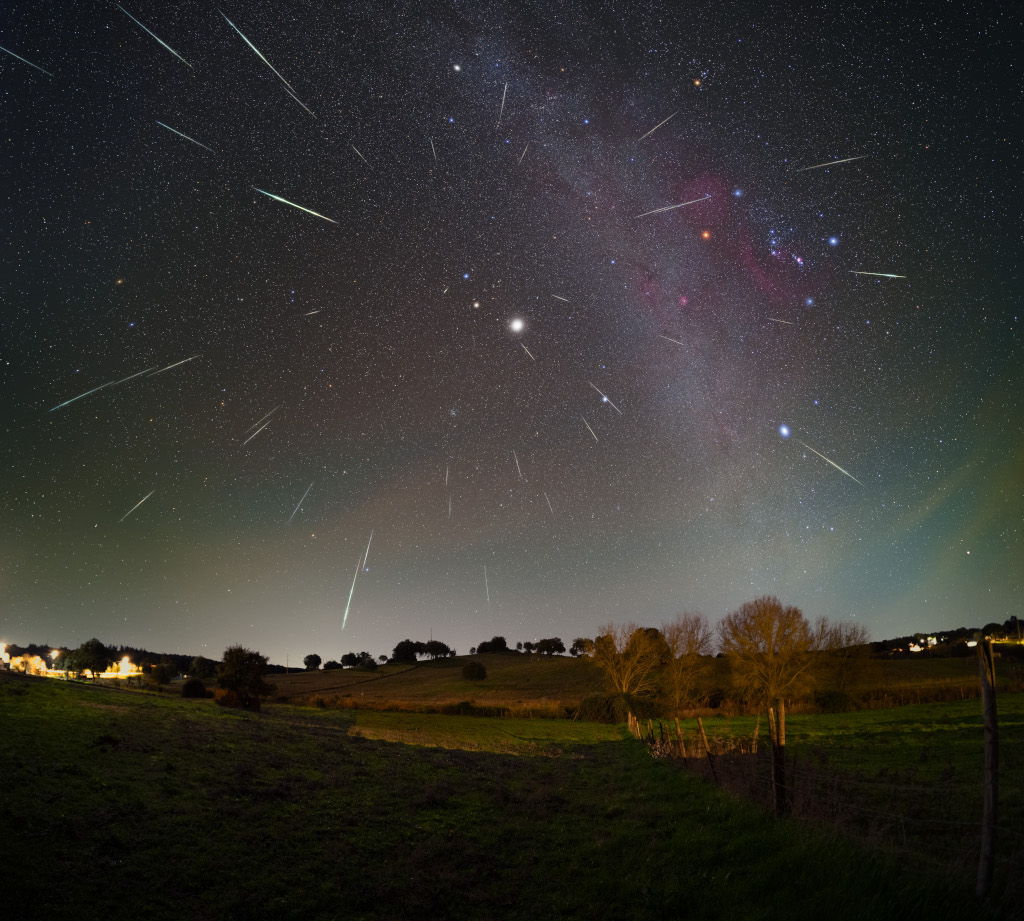
Jupiter, the Solar System's ruling gas giant, is the brightest celestial beacon at the center of this composite night skyscape. The scene was constructed by selecting the 40 exposures containing meteors from about 500 exposures made on the nights of December 13 and 14, near peak activity for this year's annual Geminid meteor shower. With each selected exposure registered in the night sky above Alentejo, Portugal, planet Earth, it does look like the meteors are streaming away from Jupiter. But the apparent radiant of the Geminid meteors is actually closer to bright star Castor, in the shower's eponymous constellation Gemini. In this frame that's just a little above and left of the Solar System's most massive planet. Still, the parent body of Geminid meteors is known to be rocky, near-Earth asteroid 3200 Phaethon. And the orbit of Phaethon itself is influenced by the gravitational attraction exerted by massive Jupiter, in concert with planets of the inner Solar System.
NASAI'm looking for sponsors to support my open source development, I appreciate your support! :)


