I am Kaito or Ren. find me here
An aspiring electrical engineer, with interest in researching Nuclear Physics, Quantum Error Correction, and Simple Category Theory.
I wish to develop electronics that is redundant and reliable to be used in intense environments. I hope to design my own sets of instruments as scientific equipment for physics.
I run a GNU/Linux distribution NixOS ensuring safety and redundancy of my OS. NixOS is a purely functional, declarative and determinantive operating system that allows one to run predictable deployments in other systems. Within NixOS I run two IDEs: VSCodium to develop on non-low level programming languages and NixCat-based neovim that allows my determinant operating system to purify neovim.
I am currently working on mutiple projects including a flake that allows one to run NixOS on a clockworkPi, Cycling computer hijacking the power meter from my crankset, and possibly a low-power f91-w board forked from the sensorwatch project. There are also other projects that i'm working on that you may be more interested reading on schematic.
I am working on projects with @MIT-OpenCompute, functor.systems, and myself.
- I have experience using low level languages such as C++, C, Fortran, Rust, and Cobol
- I am currently learning VHDL, System Verilog, Verilog, Chisel(Scala)
- I have worked with ARM sdk, GNU Science Library, and currently learning OpenGL
- I have (some) experience with high level languages such as Julia, Python and Java
- I have experience CADing in Altium Design, KiCAD, Eagle CAD, Fusion 360 and Solidworks
- I have little to no experience with simulations(except for verilator).
- I can speak: 國文(Mandarin), English, 明南語(Taiwanese)
Hoshimachi Suisei and Asahina Mafuyu are my oshi.
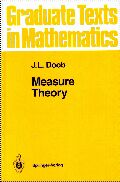 | If I were a Springer-Verlag Graduate Text in Mathematics, I would be J.L. Doob's Measure Theory. I am different from other books on measure theory in that I accept probability theory as an essential part of measure theory. This means that many examples are taken from probability; that probabilistic concepts such as independence, Markov processes, and conditional expectations are integrated into me rather than being relegated to an appendix; that more attention is paid to the role of algebras than is customary; and that the metric defining the distance between sets as the measure of their symmetric difference is exploited more than is customary. Which Springer GTM would you be? The Springer GTM Test |