- California is one of the world’s biodiversity hotspots, yet much of its life—especially insects and fungi—remains undocumented, even in a state rich in scientific institutions.
- The California All-Taxa Biodiversity Inventory (CalATBI) is working to build a verifiable, statewide record of life, combining fieldwork, DNA analysis, and museum collections.
- By focusing on evidence that can be revisited and tested over time, the effort provides a baseline for understanding ecological change rather than prescribing solutions.
- Mongabay’s reporting follows how this foundational work underpins later decisions about protection, restoration, and management—showing why counting still matters.

Why Mongabay is reporting on California’s biodiversity
Mongabay’s coverage of biodiversity has long been associated with tropical forests and far-flung frontiers. Yet California—wealthy, populous, and intensively studied—presents a different kind of challenge. It is one of the planet’s biodiversity hotspots, and yet much of its life remains undocumented, unnamed, and unaccounted for. That contradiction sits at the heart of the California All-Taxa Biodiversity Inventory (CalATBI), a statewide effort to catalogue life before it disappears. Over the past several months, Mongabay has reported on CalATBI and its partners as they attempt something unusually comprehensive: to build a verifiable, statewide baseline robust enough to support decades of future decisions.
What follows draws on Mongabay’s reporting on insects, fungi, museum collections, and field science in California. It is not a catalogue of threats, nor a tour of charismatic species. It is a portrait of an infrastructure project—scientific, institutional, and human—designed to answer a basic question that turns out to be surprisingly hard to settle: what lives here?
Discovering what still lives here
California has never lacked for ambition. Its 20th-century infrastructure projects—like dams, aqueducts, and freeways—are known for their scale and confidence. CalATBI belongs to that lineage, though its raw material is not concrete or steel, but beetles, spores, DNA fragments, and pinned moths.
The premise is straightforward. California cannot protect what it has not documented. Despite centuries of natural history, thousands of species remain undescribed, particularly among insects, fungi, and soil organisms. Many exist only as fleeting presences, active for weeks each year, then gone. CalATBI’s response is to build a voucher-based, DNA-powered inventory of life across the state, drawing together hundreds of scientists, museums, universities, and trained volunteers.
The work is distributed across five programs—Insecta, Funga, Soil Biodiversity, Intertidal Biodiversity, and environmental DNA—but united by a single constraint: evidence must be verifiable. Photographs are useful. Observations matter. But a species that cannot be examined again leaves future researchers with little to work from.
That insistence on physical records explains why CalATBI has invested heavily in collections. Specimens are sequenced, archived, and linked to genetic data. The result is more than a snapshot of biodiversity: a reference library that can be revisited as methods improve and questions change.
Nowhere is that logic clearer than in insects.
Counting the uncountable
California may host anywhere from 60,000 to more than 100,000 insect species. No one knows. Austin Baker, a postdoctoral researcher at the Natural History Museum of Los Angeles County, is among those trying to reduce that uncertainty. Under the California Insect Barcode Initiative, a core component of CalATBI, Baker and his collaborators are sampling every ecological region in the state, repeatedly, and with little regard for convenience.
“You could visit any vegetated area across the state and potentially collect several new species,” Baker has said. The task is complicated not just by geography—deserts, alpine forests, fog-cooled coasts—but by time. Many insects are active only briefly. Missing a season can mean missing a species.
The solution has been persistence. Passive traps sit in place for months. Teams return week after week, sometimes fruitlessly. Every specimen is tagged, sequenced, and retained. DNA helps organize the overwhelming diversity, but specimens remain essential. Barcodes can mislead; bodies can be reexamined.

This distinction matters because CalATBI is not simply trying to name species. It is trying to establish baselines. Insects respond quickly to environmental change. Without reference points, it is difficult to tell whether change is real, local, or simply perceived.
Scaling fieldwork
Field science at this scale would be impossible without help. One of CalATBI’s less obvious strengths has been its partnership with organizations such as Adventure Scientists, which trains outdoor enthusiasts to collect data to laboratory standards.
Volunteers hike, paddle, and climb into places scientists rarely reach, working within tightly defined protocols that allow their samples to meet institutional requirements. Each collection is tracked, reviewed, and verified before it enters the record. The model succeeds because scientific rigor is applied consistently, even when data collection is distributed across hundreds of people and thousands of miles.

“Adventure is what brings people to the work, and our success comes from consistency and discipline,” said Gregg Treinish, founder of Adventure Scientists. “That is where our credibility comes from and why scientists, governments, and companies trust the data we deliver.”
That discipline reflects a broader theme across CalATBI: participation is welcome, but evidence determines what enters the record.
Museums as infrastructure
Behind the fieldwork lies a more traditional system: museums. Institutions such as the California Academy of Sciences and the Natural History Museum of Los Angeles County have become the backbone of CalATBI, housing specimens and integrating genetic workflows into long-standing collections.
The inventory speeds up work curators already know well. Historic specimens—some collected a century ago—are being sequenced, photographed, and digitized. DNA barcoding has become routine, which is precisely what makes it powerful.

“Without that voucher specimen that can be studied through time, the repeatable nature of science is lost,” Chris Grinter, Senior Collection Manager of Entomology at the California Academy of Sciences, told Mongabay.
The result is a hybrid archive: physical specimens linked to genetic identifiers, geographic data, and collection histories. For agriculture, conservation planning, and environmental monitoring, this matters. A pest species detected through environmental DNA is far more useful if it can be matched to a verified reference.
The fungal blind spot
If insects dominate by sheer numbers, fungi dominate by neglect. Until recently, California had no comprehensive survey of its fungal diversity. That absence is striking given fungi’s role in soil health, carbon cycling, and forest resilience.
Through CalATBI-aligned efforts such as the California Fungal Diversity Survey, mycologists and trained collectors have documented thousands of species, many new to science. Sequencing has been essential, paired with careful preservation of physical material and metadata. The work is slow.
The payoff is practical. Fungal communities influence how forests recover after fire, how seedlings survive drought, and how pollutants are broken down. Without knowing which species are present, restoration becomes guesswork.
Mongabay’s broader California reporting—on redwood canopies, beaver restoration, salmon watersheds, and endangered plants—picks up where inventories leave off. It follows what happens once species are known, named, and, in some cases, already in trouble.
CalATBI operates earlier in the sequence. Its focus is on building records that others will later rely on. The project is careful about what it claims to deliver: an inventory does not save species, but it makes arguments for protection, restoration, and management possible.
A race without a finish line
There is no moment when CalATBI will declare California complete. New species will continue to be discovered. Others will vanish before they are named. The inventory is a race against loss, but also against ignorance.
What distinguishes it from many conservation efforts is its restraint. The project does not assume it already knows what matters. It is building the capacity to find out.

For Mongabay, that makes California a compelling place to report. The state is not short of money, expertise, or attention. Yet even here, the living inventory is incomplete. If biodiversity can slip through the cracks in California, it can slip anywhere.
CalATBI’s wager is that careful counting still matters—not as nostalgia for natural history, but as infrastructure for decisions yet to be made.
Mongabay has a grant to report on California’s biodiversity from the California Institute of Biodiversity (CIB), which also funds a variety of institutions engaged in researching biodiversity in California. Mongabay maintains complete editorial independence over stories about grantees of CIB, which means CIB does not have the right to assign, edit, or review Mongabay’s reports prior to publication.
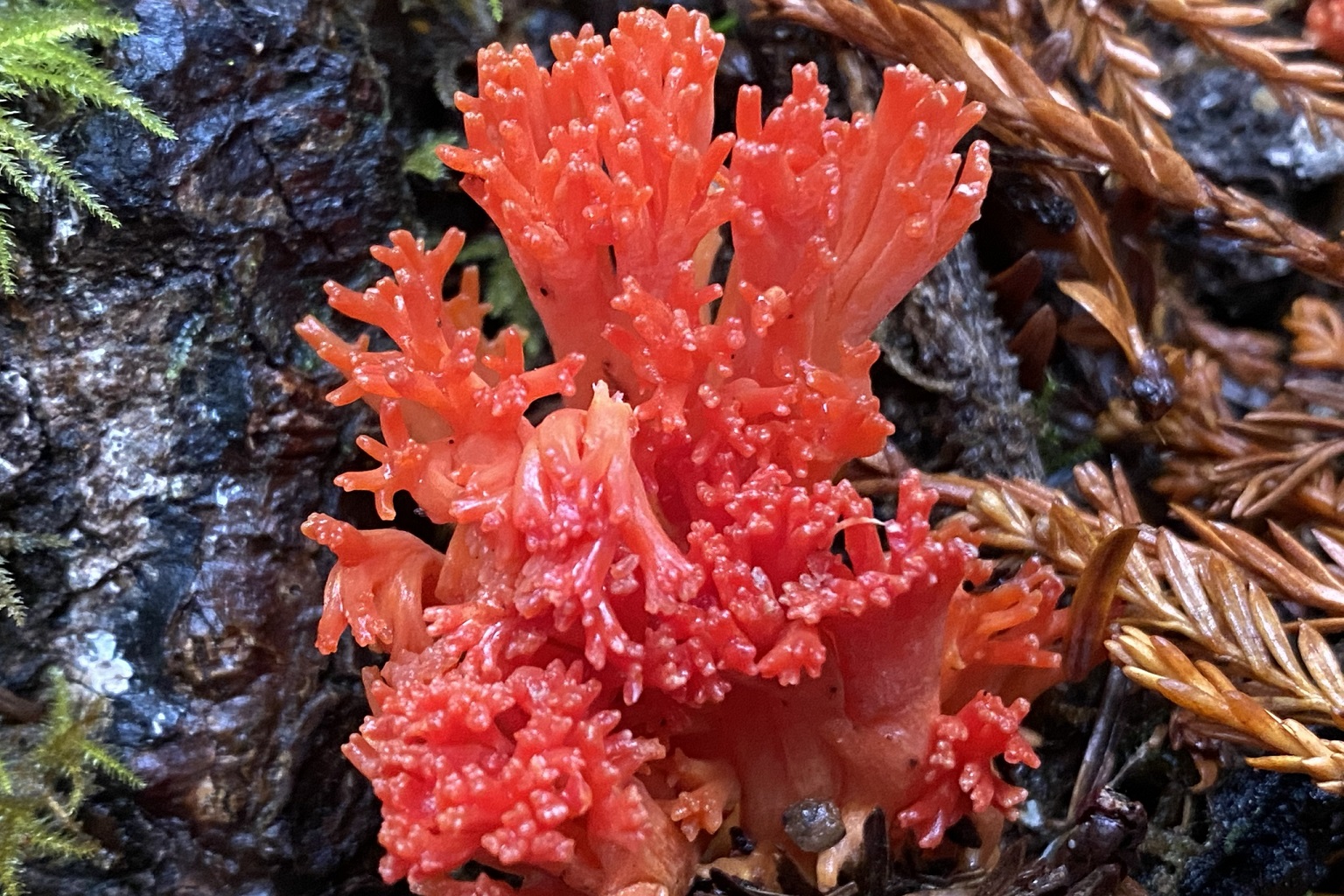
Header image: Mushrooms in San Mateo County, California. Photo by Rhett Ayers Butler
Credits